Wednesday, 24 August 2016

Historical Cycling Tour from 15 Miles to Leh

Over last couple of years, cycling has become a passion and a way of life for me. On 23rd March 2016, I signed up with Youth Hostel Association of India for this 12 days (including test ride) bicycle ride in the Himalayan valley from 15 Miles to Leh. It was not just covering this route on cycle, for me it was discovering life, pushing myself physically, mentally, emotionally and spiritually. It was for testing the strength of my grit, belief and purpose. It was for getting inspired and hopefully for being an inspiration. I will share an everyday account of this amazing cycling trip through one of the toughest terrains in the world.
Day 0 – July 10, 2016

We reached 15 Miles YHAI base Camp at 8:30 am. In the afternoon I took a walk to the Manali market and Hidimba Temple. From the Manali market, I could see Rohtang Pass. We were in total 53 riders in Batch 1 who were leaving for ride on 13th July 2016. In evening, we sat down at Beas River side near our Base camp. After Dinner at base camp, we get to know each other in introduction session.
Day 1 & 2 – July 11-12, 2016

In morning, we got our bicycles from YHAI with all required accessories. Then after lunch we got ready for our test ride to Naggar, a beautiful village between Manali and Kullu. We had two trips to Naggar Castle with some steep climbing. There is a Russian painter, archaeologist Nicholas Roerich home converted into Museum in Naggar Castle. While returning to base camp, we enjoyed Fresh Apples from Orchards.

Day 3 – July 13, 2016 (15 Miles to Marhi – 48km)

We started our ride from 15 Miles to our next destination Marhi, roughly 48 kms. Total climb of the day was 1800 meters. I started at 9:00 am after SDM arrived for flag off. I was riding Firefox Target D, which performed up to the mark on the rough route. We passed through Manali and took a 15 min break to click photographs. Till Marhi, I did solo ride waving to other riders & Army in between. As it was my first long climbing experience, I had to stop after every 15-20 minutes for break. Near Solang Valley, I met a couple who were riding with their tents and bags which motivated me. 

By 2:00 pm we had a break for lunch. At that time, there was around 18km to be covered. Clouds started gathering and suddenly there was no visibility beyond 5-10 feet. Then it started drizzling at around 3:30 pm. Luckily, I was not carrying Rain coat with me and started feeling cold. I pedaled continuously for last 1:30 hrs. & drank water from my Hydration Bag without stopping and reached Marhi by 5:00 pm. By far this was the toughest day of this journey. Some of the riders kept arriving by 10:00 pm by night and some of them quit the next morning.

Day 4 – July 14, 2016 (Marhi to Sissu – 45km)

We started our ride in foggy weather from Marhi to climb Rohtang Pass. It is a ride to Rohtang Pass located at 3978 meters.   Interestingly Rohtang means “pile of corpses” as many people die trying to cross the pass during cold weather and unpredictable snowstorms. From the top, breathtaking views of the glaciers and snow clad mountains of the Chandrabhaga Range on the other side of the pass was spectacular. The ride down was challenging due to very bad road conditions. Many bikers and tourists were saluting us or giving thumbs up throughout the route, which boosts my morale and my dream of carrying National Flag on my bike, motivated me. I enjoyed the most on downhill with speed and drifting and singing patriotic songs.

The downhill ride ended in Koksar where we had lunch at roadside dhaba. After Koksar there were some plain straight downhill roads towards Sissu where many of us might have touched the speeds of 70’s and 80’s. The camp site at Sissu was wonderful with Chenab River flowing in the backyard. There was a waterfall flowing through a heart shaped rock structure. This was one of the best camp sites of this journey and there was no shortage or supply of water.


Day 5 – July 15, 2016 (Sissu to Jispa – 60km)

After Sissu I decided to reach at last to every milestone and enjoy the ride with fellow riders. Sissu to Jispa is around 60kms along with Chandra and Bhaga rivers. It turned out to be a rough ride due to bad roads, sudden change in gradients, and hot afternoon. Parts of the road were filled with thick layer of dust and rubbles. We took a break in between at Tandi for 30 minutes and had lunch. From Tandi, there was a climbing road towards Keylong. I took a break under shades and wait for fellow riders to join. We then again took a break at Keylong for lunch. The road from Keylong was unexpectedly tough as the road suddenly increased in gradient and afternoon was very hot. Final stretch towards Jispa is a complete downhill with sharp turns in between. After Jispa there are no mobile postpaid network connections. Jispa was the place where we got built up location for stay. It took 8 hours to complete this ride.


Day 6 – July 16, 2016 (Jispa to Zing-Zing Bar – 35km)

Today we ride from Jispa to Zing-Zing bar. Our route continued along the Bhaga River till Darcha. From Darcha the roads climbed in switch back turns and gradually lead to Zing-Zing bar. Zing-Zing bar is at the base of Baralachla climbs, the next major milestone on our tour. There were multiple waterfalls and at the base of waterfalls there were loose boulders or nala’s. Crossing the boulders on cycle required some skill. On the route, we had a brief halt at Patseo near Deepak Taal as it was drizzling outside. After Deepak Taal, we passed through the first Army base camp and I felt so patriotic to see our soldiers. Zing-Zing bar camp was at 4300 meters altitude. Oxygen levels were periodically checked for those who were feeling uncomfortable. It was the first time I felt bit difficult in breathing.

Day 7 – July 17, 2016 (Zing-Zing Bar to Sarchu – 53km)

The strenuous section and high altitude of the trip begins from here. From Zing-Zing bar the hard climbed started and continued to Baralachla, elevation of 16040 feet/4890 meters. Route passed through beautiful Lake of Suraj Taal. A group of motorcyclists were amazed to see me riding a cycle on top of Baralachla. They applauded “Bravo, Bravo” and took some pictures. The views from the pass are amazing. At higher altitudes, oxygen availability is less so the efforts get automatically multiplied. Once again weather changed drastically and it started raining.

Sarchu is the border between Himachal and Jammu & Kashmir. This was the point where we had crossed Spiti Valley and entered into Ladakh Valley. Road descends from the pass to the plains of Sarchu. The landscape changed completely with no trace of trees. The landscape is awe-inspiring – blue sky, enormous mountains, and marvelous contours of the rivers.


Day 8 – July 18, 2016 (Sarchu to Whisky Nala – 48km)
Today is an uphill ride covering the famous Ghata Loops and Nakeela Pass and downhill to Whisky Nala. Ghata Loops is a 21 hairpin bends that takes us from 4190 meters to 4630 meters. Nakeela pass is at 15547 feet/ 4950 meters after Ghata Loops. It was a proud moment for me at Nakeela Pass and riding with the flag on my bike. I again did solo ride after Ghata Loop end till Whisky Nala because of late hours.

Day 9 – July 19, 2016 (Whisky Nala to Pang – 29km)

This was the small distance ride of complete journey. There was around 6km of climb till Lachungla Pass and then downhill till Pang. Pang is one of the world’s highest transit camps of army. At that night, I called my home from Army’s Satellite phone and ensured them everything is alright.


Day 10 – July 20, 2016 (Pang to Debring – 41km)

At Pang, Flag off was done by Army Major at around 9:00 am. After climbing 5km we reached Moore Plains. These are the world’s largest plains after 16000ft height. It is a very good road surrounded by deserts and mountains. Our camp site was at Debring, which was the highest camp site of all. It was at 4600+ meters of height. There were some dried up lakes along the roads and it was very hot in afternoon. For long distances there was nobody. We sat down silently near a milestone for an hour.


Day 11 – July 21, 2016 (Debring to Rumtse – 56km)

Today was the second most difficult ride on our tour to cross Taglangla. Taglangla is at 17582 feet/ 5359 meters and is claimed to be the second highest motorable pass in the world. I was persistent and kept riding. It was a great relief to reach on the top. We celebrated, danced a lot at the pass. I stayed there for 1:30 hours and took my lunch. The downhill ride to Rumtse was rewarding. The camp site at Rumtse was one of the best with 24 hours water stream flowing and farms spread on the sides of tents.


Day 12 – July 22, 2016 (Rumtse to Leh – 80km)

We are now close to the end of this amazing journey. The ride to Leh is great as we say human habitats, animals and trees after many days. Roadside after Upshi you find military establishments and beautiful monasteries co-existing. The road is mostly plain except for the last 10km stretch to Leh which gradually goes up. On the route we came across Rancho’s school, Thiksey and Shey Monasteries. It felt like heaven when we finally reached our last base camp in Leh.
We had 53 members in our batch out of which 43 managed to reach till Leh. We cycled for about 80 hours throughout the journey. The next two days we explored Leh city and visited places like Shanti Stupa, Zorawar Fort, Hall of Fame, French Bakery and Leh Market. On July 24, 2016 I returned back to Delhi with my first ever experience in Air India.
Few of the quotes that I kept telling myself throughout the journey and following them heartedly are:-

Never Criticize, Always Encourage.

You just want to be passionate. Find something you care about and care deeply.

Treat others as you would like to be treated.

If you only do what you can do, you will never be more than you are now.

Finally quoting a FB post from one of the friends in the group, which sums up the whole journey - Mountains, they test you, bring you on your knees, break your over-confidence, sometimes part you in millions of pieces and then all you know is – Life is not about getting stuck in complications but about living the simplicities.

Thursday, 18 August 2016

Updates in Google Adwords so far in 2016

Beginning in February 2016, there was a rush of announcements that culminated at the Google Performance Summit on May 24. Those announcements will shape much of what search marketers will be working on in the second half of the year. Here’s a look back at all the big feature updates, launches and news from Google Adwords so far this year.

Right Rail Ads: - In February, Google confirmed that they would no longer serve text ads in the right rail on desktop. The move unifies how text ads display on all devices.

Ads in Local & Maps: - In April, Google started showing ads in the Local Finder, the page of local and Map results that users got to by clicking on “More Places” from the local three pack on the main search results. Google no longer categorizes Maps as Search Partners. The change means that only ads with Location Extensions are eligible to show in Maps, and it also means advertisers can opt out of Search Partners and still show ads in Maps.

Expanded Text Ads: - Expanded Text Ads are the biggest change announced in the first half of the year. Every single advertiser running text ads will be rewriting ads in the coming months.
Device Bidding: - Google is bringing device bidding back to pre-Enhanced Campaign days. Bid modifiers remain, but tablet and desktop bids will be separate, and advertisers can set base bids for Mobile.

Updates for Shopping and Retail: - GTIN requirements for shopping feeds went into effect to help Google improve the relevancy of product listing ads for user queries. Google officially brought Shopping Ads to Image Search. They also added a “store pick up” link option for Local inventory Ads to appeal to local shoppers who want to buy online and pick up in-store. Google announced inventory search in local knowledge panels for users to be able to see if an item is in stock at their local retailer. The feature is automatically available to retailers running Local Inventory Ads. Shoppers will soon notice 32 or 16 products as Ads in Google Search. Earlier there was space for 8 products.

Conversion Attribution Model: - Search Marketers can now set different attribution models including the new data-driven attribution model for individual conversion events in Adwords.

App Parity: - Google finally launched an iOS app for Adwords. Now Advertisers can access Adwords Apps on both Android and iOS.

Redesigning Adwords Interface: - Advertisers will hope to see newly designed UI of Adwords in second half of 2016.
Google Analytics 360 Suite: - Google launched a premium suite of Analytics. New in the premium suite is the long-awaited data management program (DMP), a landing page testing/personalization tool and a custom reporting tool.

Adieu Converted Clicks: - From September 2016, Converted clicks columns in Adwords will get deprecated. Advertisers will now consider All Conversions and View through Conversions.

Similar Audiences: - Adwords now create similar audiences using customer match data for targeting on Gmail and YouTube. Also, advertisers can now target Similar Audience in Search Ads or Re-marketing List Search Ads (RLSA) Campaigns. Also, RLSA Campaigns can now run on Search Partner Sites.

Cross-device Conversions: - Cross device conversions are now included in All Conversions.

TrueView Discovery Ads: - TrueView in-display Ads are now known as TrueView video discovery ads. These ads run on YouTube.

In-Market Audience: - Advertisers can now target In-market audience in Gmail Ads.

Target CPA on GDN: - A new version of the Target Cost-per-Action bidding structure with zero eligibility requirements launched on Google Display Network. Previously advertiser needed fifteen conversions in 30 days to opt-in to Target CPA. Now advertisers will be able to opt. all campaigns into Target CPA from day one with no campaign history, driving better and more efficient performance.

Quality Score Reporting: - Advertisers will begin seeing null Quality Scores in Adwords (designated by “-“), which will display where there are not enough impressions or clicks to accurately determine a Keyword’s Quality Score.

Price Extension: - The new Text ad Extension shows pricing information about products and services and takes up significant real estate on mobile.

Responsive Ads: - The Next generation of Text ads, Responsive Ads are design to adapt to their surroundings and create the perfect fit for any ad slot on the Google Display Network.

Carousel Cards: - Google is planning to launch carousel cards for Sitelinks used with Text Ads.

Health Score: - Google is testing a new overview in the Opportunities tab in Adwords that gives Advertisers an “Account Health Score for Search.”

Call Only Ads: - When Google debuted call only ads last year, one of the issues businesses objected to be the fact that only the phone number appeared in the ads. This is now changed, with business names now showing up in a second headline in call only ads.

Drafts and Experiments: - Google had also launched Drafts & Experiments features in Adwords which is now extended to Google Display Campaigns. It can be used to test changes to campaigns, such as bid adjustments and strategies, without affecting performance. In Drafts, advertisers can make a mirror campaign in which to make changes. These can be applied to the active campaign, deleted or executed as an experiment to test how the changes perform against the original campaign by designating a portion of the budget to the experiment for a period of time.

Campaigns Forecasts: - Google is slowly rolling out a new feature that allows advertisers to track goals across groups of campaigns. Advertisers can group campaigns into a campaign set and assign a performance target for conversions, CPA or spend within a specific date range. The tool then provides an overview of performance along with forecasts for goal achievement by the end of the date range.

Firebase Analytics: - Google has launched Firebase Analytics, a new analytics solution for mobile apps. It is designed specifically for mobile apps. That means instead of focusing on page views, impressions or sessions, developers can see what users are doing inside the app, how paid advertising campaigns are performing with cross-network attribution and where users are coming from.
SMS Ad Extension: - Google Adwords is now testing a new ad extension, similar to call ad extension for sending SMS or text messages to the advertiser. Clicking on the text messaging icon will allow users to text the company that is advertising on Adwords. When users click the icon, it opens default messaging app. It prefills the text message with the advertiser’s information. 

Adwords Editor: - Adwords Editor is now updated with inclusion of all Extensions and Expanded Text Ads.

Sunday, 7 August 2016

Goods and Services Tax (GST) Bill Explanation

The Goods and Services Tax (GST), the biggest reform in India’s indirect Tax structure since the economy began to be opened up 25 years ago is now a reality. Here’s how GST differs from the current regimes, how it will work, and what will happen if Parliament clears the Bill.
Stage 1 - Imagine a manufacturer of say, shirts. He buys raw material or inputs – cloth, thread, buttons, tailoring equipment worth Rs 100, a sum that includes a tax of Rs 10. With these raw materials, he manufactures a shirt. In the process of creating the shirt, the manufacturer adds value to the materials he started out with. Let us take the value added by him to be Rs 30. The gross value of his good would then be Rs 100 + 30, or Rs 130. A tax rate of 10%, the tax on output will then be Rs 13. But under GST he can set off this Tax (Rs 13) against the Tax he has already paid on raw materials (Rs 10). Therefore, the effective GST incidence on the manufacturer is only Rs 3 (13-10).

Stage 2 - The Next stage is that of the good passing from the manufacturer to the wholesaler. The wholesaler purchases it for Rs 130, and adds on value (margin) of Say Rs 20. The gross value of the good he sells would then be Rs 130 + 20 or a total of Rs 150. A 10% tax on this amount will be Rs 15. But again, under GST, he can set off the tax on this output (Rs 15) against the tax on his purchased good from the manufacturer (Rs 13). Thus, the effective GST incidence on the wholesaler is only Rs 2 (15-13).

Stage 3 - In the Final stage, a retailer buys the shirt from the wholesaler. To his purchase price of Rs 150, he adds value of say Rs 10. The gross value of what he sells therefore goes up to Rs 150 + 10 or Rs 160. The tax on this, at 10% will be Rs 16. But by setting off this tax (Rs 16) against the tax on this purchase from the wholesaler (Rs 15), the retailer brings down the effective GST incidence on himself to Rs 1 (16-15). Thus, the total GST on the entire value chain from the raw material suppliers through the manufacturer, wholesaler and retailer is Rs 10 + 3 + 2 + 1 or Rs 16.
Scenario in Non-GST Regime – In a full non-GST system, there is a cascading burden of “Tax on Tax” as there are no set-offs for taxes paid on inputs or on previous purchases. If we consider the same example as above, the manufacturer buys raw materials at Rs 100 after paying tax of Rs 10. The gross value of the shirt he manufacturers would be Rs 130, on which he pays a tax of Rs 13. But since there is no set-off against the Rs 10 he has already paid as tax on raw materials the good is sold to the wholesaler at Rs 143 (130 +13).

With the wholesaler adding value of Rs 20, the gross value of the good sold by him is then Rs 163. On this, the tax of Rs 16.30 (at 10%) takes the sale value of the good to Rs 179.30. the wholesaler, again can’t set off the tax on the sale of its good against the tax paid on his purchase from the manufacturer. The retailer buys the good at Rs 179.30 and sells it at a gross value of Rs 208.23 which includes his value addition of Rs 10 and a tax of Rs 18.93 (at 10% of Rs 179.30). Again, there is no mechanism for setting off the tax on the retailer sale against the tax paid on this previous purchase.

The total tax on the chain from the raw materials suppliers to the final retailer in this full no-GST regime will work out to Rs 10 + 13 + 16.30 + 18.93 = Rs 58.23. For the Final consumer, the price of the good would then be Rs 150 + 58.23 = Rs 208.23. Compare this 208.23 with a tax of Rs 58.23 to the final price of Rs 166, which includes a total tax of Rs 16, Under GST.
Present Scenario – Currently, we have Value Added Tax (VAT) systems both at the Central and State levels. But the central VAT or CENVAT    mechanism extends sets offs only against central excise duty and service tax paid up to the level of production. CENVAT does not extend to value addition by the distributive trade below the stage of manufacturing, even manufacturers can’t claim set off against other central taxes such as additional excise duty and surcharge.

VATs cover only sales. Sellers can claim credit only against VAT paid on previous purchases. The VAT also does not subsume a host of other taxes imposed within the states such as luxury and entertainment tax, octroi, etc. Once GST comes into effect, all central and state level taxes and levies on all goods and services will be subsumed within an integrated tax having two components, a central GST and a state GST.

This will ensure a complete, comprehensive and continuous mechanism of tax credits. Under it, there will be tax only on value addition at each stage, with the producer/seller at every stage able to set off his taxes against the central/stage GST paid on his purchases. The end-consumer will bear only the GST charged by the last dealer in the supply chain, with set off benefits at all the previous stages.

Wednesday, 3 August 2016

Rio 2016: India’s brightest Medal prospects

India is sending its largest ever contingent for the Rio Olympics this year with several medal prospects in its ranks.

Sania Nehwal - Discipline: Badminton. After battling injuries at the start of the year, Sania has endured a mixed season so far. She defended her Australian Open Superseries title and settled for a bronze at the Asian Championships. Saina won bronze medal at the 2012 London Olympics. She is the only Indian shuttler to win an Olympic Medal.
PV Sindhu – Discipline: Badminton. World No 10 PV Sindhu has had an inconsistent run in the women’s singles in Badminton. Her lone title this year came in the Malaysia Masters and Macau title last year. PV Sindhu is the first ever women’s singles player to win a medal at the World Championships where she won the bronze in 2013 and 2014.

Srikanth Kidambi – Discipline: Badminton. He is the first Indian to win a Super Series men’s title in 2014 China Open Super Series. He clinched the Syed Modi International this year and won two more gold medals at the 2016 South Asian Games. He had also won Swiss Open Grand Prix and clinched the Indian Open Super Series. He also has a Thailand Open Grand Prix title to his credit.

Deepika Kumari – Discipline: Archery. One of India’s biggest medal hopes, Deepika Kumari had to settle for silver in the mixed recurve pair event at the Archery World Cup. Deepika qualified for the Rio Olympics after scoring 686/720 in the women’s recurve event at the World Cup in 2015. She is a former World No 1 ranked Archer in women’s recurve and won her first World Cup Gold in 2012. She also won a Gold Medal in the 2013 Archery World Cup and has 3 Silver Medals so far.
Bombayla Devi – Discipline: Archery. Bombayla won a silver medal in the team event at the World Cup this year. She won the Gold in the 2010 CWG in the recurve team event and has 12 podium finishes in World Cups and World Championships.

Laxmirani Manjhi – Discipline: Archery. She clinched a silver medal in the individual recurve event and the team event at the 2015 Archery World Championships.

Irfan Kolothum Thodi – Discipline: 20km racewalk. Irfan is the current Indian record holder who burst onto the scene of race walking after securing a tenth place finish at the London Olympics. He covered the 20km race in 1:22:19.

Tintu Luka – Discipline: Women’s 800m. She secured gold in the Asian Athletics Championships in the 800m event and won silver in the 4*400m relay. Tintu impressive record includes a silver medal at the 2014 Asian Games in Incheon and gold in the women’s 4*400m relay in the same competition, which also saw India clinch its fourth consecutive gold since 2002.
Vikas Gowda – Discipline: Discus. He had finished eighth place in London Games finals. He is the current national record holder and has two Asian Athletics gold medals to his credit. He also won gold at the 2014 Commonwealth Games in Glasgow.

Friday, 8 July 2016

Startups with Women Founders

Women have been equally involved in the Indian startup industry, having founded/co-founded some of the prominent ventures. Here is a list of 10 startups with Women Entrepreneurs behind them.

MyDala – Almost anyone who shops online knows about MyDala. Among the largest online coupon and discount platforms in India, MyDala was founded in 2009 by Anisha Singh. And in just few years, it has grown to handling around 200,000 transactions every day and targeting 400 Million consumers in over 200 cities.

Shopclues – An online shopping place selling products including everything from technology and fashion to footwear and Jewelery was co-founded by Radhika Ghai Aggarwal. She is currently the chief business officer of the ecommerce company.

MobiKwik – Upasana Taku, along with Bipin Preet Singh, founded the semi-closed mobile wallet and online payment platform MobiKwik in 2009. But this is not her only venture. She also founded Zaakpay, another payment gateway.
Yatra.com – It was founded by Dhruv Shringi, Manish Amin and Sabina Chopra in August 2006. It is among the largest online travel related websites in India. Speaking about the co-founder, Sabina Chopra is the COO of corporate hotels at Yatra. In the past, she has served as the executive vice president of operations.

Infibeam – Involved in online retailing, e-commerce, and software and internet services, Infibeam has Neeru Sharma as its co-founder and head of corporate and business development.

Zivame – After realizing that lingerie is an under-served category in India, Richa Kar co-founded Zivame in 2011. Today, it is the biggest online retailer of lingerie in India and is getting increasingly accepted by women as a comfortable way of shopping innerwear online.

YourStory – Hailing from Patna, YourStory founder Shradha Sharma had worked with The Times of India and CNBC TV18, getting her experience at field reporting. But it wasn’t until August 2008 that Shradha thought of starting her own venture – YourStory.

LimeRoad – Gurugram based LimeRoad happens to be India’s first boutique fashion marketplace for women and is run by Suchi Mukherjee. LimeRoad is an e-commerce platform where one can discover, share and shop. The startup has also risen a funding of $50 Million from investors.

Sheroes – Sheroes curates work from home jobs in India and helps women seeking careers while still giving time to their homes. The portal also helps women find relevant resources and mentors. It organizes community meets, job fairs, special workshops and programs, as well as coaching, mentoring, community resources to help women professionals. It was founded in 2014 by Sairee Chahal. She also co-founded Fleximoms, a platform for flexible jobs and returning professionals.

Sugarbox – Sugarbox is a gift subscription service aimed at women. The gifts include products in categories such as Fashion, beauty, lifestyle and gourmet products. The woman behind Sugarbox is Niharika Jhunjhunwala. Sugarbox was founded in November 2014.

Tuesday, 5 July 2016

Futuristic Technologies

From bendable displays to batteries that last for years, technology is continuously evolving. Here are some of the technologies that will be available sooner. Internet through power lines is the simplest of ideas. Instead of using separate fibre cables or phone lines, why not use the existing network of power cables to deliver data? If this enabled, one will no longer need to find Ethernet wires. One would just plug computer into the power socket for charging and it would get an Internet connection too.

Wireless Charging, one can just place gadget on an inductive mat and they will start charging. Set standards like Qi and PMA are already being used in devices and one can easily get a wireless charging mat, or opt for a smartphone case that add a wireless charging feature to device. Flexible screens are the new prototypes and research suggests that they will draw a lot less power than conventional displays.
Camera that doesn’t need focusing will let user to change the focus in an image after clicking. Since there is no need to focus while taking a photo, the camera will work faster. It captures depth information of the image and all the available light in the frame, enabling better low light images without flash and even 3D Images. Waterproof devices, there are many companies that are researching the application of Nano coating on the internal components of phones, which would make them waterproof without adding bulk to the devices.

Imagine having to charge cellphone only once a year. This could be possible with the use of fuel cell batteries which generate electricity for much longer than a Liion or alkaline battery. They do this using a chemical reaction of hydrogen and oxygen. Google has carried out demos of self-driving cars and there are rumors of other companies also trying their hand at developing this technology. These cars use various sensors with a computer ised vision system. The data from these is collected and analyzed by software that controls the vehicles. One can just set destinations, sit back and relax.

Sunday, 26 June 2016

Impact of Brexit on Football

Football, considered Britain’s National Sport, will face significant consequences, especially when it comes to free movement of European players and their participation in English Football. Players from EU member states do not need work permits to play and reside in Britain. In case of a player with a non-EU passport, to qualify for a work permit, he should have played in 75% of his national side competitive games over two years.

This could significantly affect the way clubs access the European player market once Brexit kicks in for real, especially accessing cheaper players from countries like France, Spain and Portugal, as some clubs have done over the past few years. In May last year, the British Government tightened their work permit rules, essentially to restrict the number of international footballers playing their trade in Britain.
According to new rules, A player from a top 10 national only has to have played in 30% of their games in the two years prior to the date of application to be granted a work permit. A player from a nation ranked 11-20 must have played in 45% of international games. This percentage rises to 60% for the next 10 countries, then 75% for nations ranked 31-50. A vote to leave the EU would mean that players from the 27 countries still in the union would need to meet these criteria. The last season saw 432 players from the 28 EU member states registered to play in the Premier League.

This could also mean that the highly competitive or the so called the best league in the world would no longer be in a position to attract, if not, access some of the best European footballing talent. Brexit, other significant impact on British Football would see clubs being forced to look inwards, and develop home grown players which will eventually benefit English Football in the long run. From a business point of view, should these new rules kick in, clubs would demand an even heavier price for home grown talent, in addition to what is informally known as the England premium in football circles.

From club point of view, they’d be reluctant to sell some of their best home grown players, both domestically and abroad. However, in the event of that not happening, where Britain remains a part of the larger EEA Bloc, these rules could be relaxed or may not get implemented. Such is Football and particularly Britain’s clout.

Monday, 20 June 2016

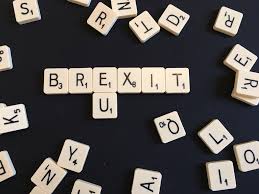
Brexit And It's Importance

One of the major global events that are expected to have a big impact on markets is the Brexit. Here is all you need to know about the campaign and why it is important. ‘Brexit’ stands for ‘British Exit’ and it refers to the possibility of Britain withdrawing from the European Union (EU).

The campaign is centered on ending the central control by Brussels and giving Britain the freedom to manage its own affairs. The United Kingdom will hold the referendum on June 23 to decide whether Britain should exit the EU. A referendum is a vote in which everyone of voting age in a country is asked to give their opinion on a political proposal. The participants are asked to either approve or reject it, generally with a ‘yes’ or ‘no’. Whichever side receives more than half of all the votes cast, wins.
If Britain exits the EU, it could impact the economy. While the long term impact of this move has not been estimated, in the short run, it could trigger flight of capital from Britain, compound its current account deficit problems, weaken the pound and increase inflation. The flight of capital could lead to the dollar strengthening in the short term. The exit of Britain could embolden political parties in the opposition in other EU countries to ask for a similar vote to exit the EU. This could have a cascading impact on global financial markets.

If the global financial markets are affected by the Brexit, Indian markets are unlikely to be insulated. For Indian companies operating in Europe especially in UK, there could be a fair bit of uncertainty with the pound expected to weaken. The bigger problem will be a likely selloff in emerging markets, which India is part of, mainly on account of a strength in the dollar and aversion to riskier assets. Let’s hope for a beneficial result of referendum.

Monday, 13 June 2016

IPL 2016 Revenue Stream

The Indian Premier League has amassed about Rs. 2500 crore in overall revenue in its recently concluded ninth season, growing at a double digit pace over the year before. The figure includes revenue that TV and digital channels made from advertisements, as well as teams from sponsorship, ticket sales and merchandising, and BCCI from on-ground sponsorship.

The biggest chunk of revenue came from TVs as advertisers vied to grab ad spots when matches were telecast during the nearly two-month long tournament, which with its fast paced short format has become very popular in this cricket crazy nation. Official broadcaster Sony Pictures Networks India (SPN) made just under Rs 1100 crore while the eight IPL franchises together earned Rs 200-230 crore from Sponsors.
The Board of control for Cricket in India generated Rs 220-250 crore from on-ground sponsorships, whereas Hotstar the digital rights holder got around Rs 40 crore. This season IPL made ticketing revenue of Rs 150-160 crore. India is a market where a lot of new brands are launching. This need to chase salience and eyeballs and IPL viewership has remained rock. IPL is celebrated like a festival that unites once a year and brings families, friends and colleagues together to enjoy the spirit of cricketainment.

IPL has developed many unique skill sets and generated lot of job opportunities that are making a difference to the larger sports and events industry in India. In terms of ticketing revenue, Royal Challengers Bangalore (Rs 25-26 crore), Mumbai Indians (Rs 24-26 crore) and Delhi Daredevils (Rs 22-24 crore) topped the charts, followed by Rising Pune Supergiants (Rs 18-20 crore), Kolkata Knight Riders (Rs 16-18 crore), Sunrisers Hyderabad (Rs 15-16 crore), Gujarat Lions (Rs 14-15 crore) and Kings XI Punjab (Rs 13-14 crore). The BCCI ended up with almost Rs 10 crore in its kitty from ticketing revenue.

IPL is progressively growing at a 10-12% rate year on year. It may not be galloping, but it is definitely not sinking either. It is going in the right direction. Another small revenue stream for the franchises was merchandising, which is estimated to have generated Rs 17-20 crore for the teams put together. While it is hard to put a definite number to it, there is substantial revenue to the broadcaster from the TV channels that are subscription based.

SPN may allocate this revenue, estimated to be anywhere from Rs 250 crore to Rs 400 crore to the three channels – Sony Max, Sony Six, and Sony ESPN, which air IPL. SPN payout to the BCCI of Rs 820 crore per year (the 10 year deal is worth Rs 8200 crore) as well as Franchises fee has not been considered for the estimates. A major chunk of this goes into a central revenue pool, from where it is distributed among the Franchises.

Monday, 6 June 2016

Ways to make Money from Blog

Over the past decade, blog monetization has gained momentum. What was once just a way of making money on the side has now become a full-fledged profession, with various revenue channels opening up. Here are few ways to make Money from Blog.
Google AdSense- Once you sign up for AdSense, you will be allotted ads to place on your blog. After this, it’s a waiting game to see if your account is approved. If it is, you can continue to receive ad placements and earn a steady, if not large, income from it. AdSense pays on the basis of clicks and views the ads receive. The two categories on offer are cost per click (CPC) and cost per 1,000 impressions (CPM), and the ads are allotted based on which category can earn more revenues for a particular blogger.

The CPC rate, for instance, can range from Rs 2 to Rs 50, depending on the niche, content, use of keywords and the traffic you receive. AdSense lets you choose where you want to place the ads on your blog, and pays you when you accrue a certain amount from clicks or views. It is a safe bet because you don’t have to screen the ads for quality or compatibility with your content. Earnings can range from a few hundred to several lakhs of rupees for different bloggers.
Affiliate Marketing- Using your blog to sell or promote another seller’s product can be one of the most profitable avenues, if you can successfully convert readers into buyers. One of the main advantages of this channel is that you will not have to deal with production, shipping and customer care. However, it also requires you to have an audience that trusts your judgment. It works best for niche audiences, especially if you have a good degree of authority in your domain, as well as great salesmanship.

You will earn a percentage of profits made by the seller from the traffic redirected by you blog. You can feature product reviews with relevant links, but too much plugging can annoy readers. It is also important to find a good offer that is credible and rewarding, and the best way to ensure this is to approach a network rather than individual brands or sellers.

Product Sales- You can market your own product by featuring photos and descriptions on your blog. You can either allow your audience to purchase the items directly through your blog or redirect them to an e-commerce portal that stocks them. You can also turn your blog into a membership site, where readers can subscribe to receive personalized services. For instance, if you specialize in handling fiancés, you can allow your audience to sign up to receive specific financial advice tailored to their needs.
Sponsorship- If your blog already attracts a significant amount of traffic, you could choose to enlist blog sponsors. Sponsorship includes selling ad space on your blog to merchants, which offers a more stable source of income. You can charge for hosting banner ads, button or links on either a one-time or a monthly basis. Ads can pay Rs 2000-15000 a month for a 2x2 space, depending on your niche and readership.

Sponsored content which blend seamlessly into your blog prevailing tone and theme can also add to your earnings. The best bet for bloggers who want to monetize is to reach out to companies or wait to be approached. Promotional posts for events or reviews can fetch you anywhere between Rs 3000 and Rs 20000, depending on the sponsor and your popularity. You can also be paid in merchandise or services, if you’re open to the idea.

Ways to find your Niche- If you are looking to start blogging; here are a few things to keep in mind when choosing your niche. Being passionate about your subject matter is crucial to creating good content. Choose a topic you love to write about it, to set yourself apart and to hold the interest of your audience. Being fond of a subject is not enough. You need to evaluate whether you have enough specialization to offer valuable content to your readers.

Like any business venture, blog monetization can only be successful if you offer something that is not easily available elsewhere. Find a gap in the content market and plug it. You must ensure that your blog is one of the top results offered by search engines when people start looking into your niche. Use SEO techniques to help your content show up in search results. For AdSense, use the Google Keyword Planner to find out which keywords rank higher, and try to choose a niche that corresponds with them. This will ultimately yield better revenues.

Monday, 30 May 2016

Digital Library of India

In early 2000, the Union Government initiated a unique project to establish the Digital Library of India (DLI). Its vision was to create a digital collection of rare books sourced from libraries in different parts of the country and make them accessible as a free online resource for research, study and of course archiving and documenting.
As a first step towards creating the DLI, a collection of one million books on a variety of subjects, including literature, science, art, culture and music were to be digitized and listed in a searchable catalogue. The project later passed into the hands of the ministry of communications and information technology. The DLI houses several rare books and publications on music in many Indian Languages, including Hindi, Urdu, Marathi, Gujarati, and Bengali. Researchers and collectors can access these at their convenience and even download and store for future reference.

The DLI also contains a scan of Musicians I Have Met by S.K. Chaubey, published in 1958 by the publications division of Uttar Pradesh information department, consisting of “pen portraits” of some of the outstanding names of in the world of Hindustani classical music. Along with several articles on music, it contains fascinating reports filed by correspondents of leading publications.

Till recently, these and thousands of other rare books could be accessed only if an intrepid researcher was willing to crawl into dusty libraries, sometimes fenced in by all manner of often unreasonable rules and red tape. Free access to DLI makes it easier and welcoming for readers and researchers. The programme in two parts, consisted of a first segment featuring presentations of instrumental music by members of Samaj, followed by a second segment of vocal music rendered by schoolchildren.

Saturday, 21 May 2016

Liberalism in India

The recent incident near Delhi where a Muslim man was lynched to death on suspicion of eating and storing beef has once again underlined the lack of liberal values in our country. It is likely that the mob that carried this vigilante action was confident of escaping punishment for its actions. After all, perpetrators of many communal riots have not been punished till date in the country.

Such facts stand in sharp contrast to the fact that India is among a handful of developing countries that has maintained its track record of having free and fair elections since Independence. There can be one possible answer and it’s between two kinds of democracies. Electoral democracies can guarantee the first two sets of rights, but only a liberal democracy would ensure that civil rights are honored as well.
Chances of emergence of a liberal democracy in a country depend on the nature of dominant cleavages in the social mobilization that ushered in democracy whether it was class based or identity based. While the majority would like to transition to electoral democracy as it gives them control over policies such as taxation and provision of public goods, it might not always be interested in liberalism. This is because the majority stands to increase its gain by denying civil rights to the minority once it has captured political power through universal suffrage in an electoral democracy.

The reason why countries of Western Europe have liberal democracies is because liberalism, a product of events such as Protestant reformation and resultant acceptance of ideas of tolerance and equality despite religion, preceded a democratic transition. In contrast to this, democratic transition in most developing countries was achieved after an anti-colonial struggle in which identity rather than class occupied center stage. Liberalism must have political legs in addition to normative appeal.

Tuesday, 10 May 2016

Ruthless Leaders of all Time

There have been cruel leaders at all times and ages, but the ruthlessness of these leaders surpass all in human history. One man’s hero is another man’s tyrant, a popular maxim goes. No matter how a historian tries to spin it, ordering a tower to be constructed out of live men stacked and cemented together with bricks and mortar is downright brutal. Here are some of the brutal leaders of past time.
Attila the Hun, after killing his brother, Attila became the leader of the Hunnic Empire, centered in Hungary. He expanded the empire to Germany, Russia, Ukraine, and the Balkans. There, where I have passed, the grass will never grow gain, he remarked on his reign. Genghis Khan, he had spent his time as a slave during his teenage years before he united the Mongol Tribes and went on to conquer a huge part of Central Asia and China. His style is characterized as Brutal and historians say he slaughtered civilians.

Timur led military campaigns through a large part of western Asia including modern Iran and Syria. In Afghanistan he ordered the construction of a tower made out of living men, one stacked on top of another and cemented together. He also ordered a massacre to punish a rebellion and had 70,000 heads built up into minarets. Joseph Stalin, forced quick industrialization and collectivization in the 1930s that coincided with mass starvation, the imprisonment of millions of people in labor camps, and the ‘Great Purge’ of the intelligentsia, the government and the armed forces.

Queen Mary I, the only child of the King Henry VIII and Catherine of Aragon, Mary I became queen of England in 1553 and soon reinstalled Catholicism as the main religion and married Philip II of Spain. Over the next few years, hundreds of Protestants were burned at the stake and for that she earned the nickname ‘Bloody Mary’. Vladimir Lenin, in 1917 he led the October revolution to overturn the provisional government that had overthrown the czar. During this period of revolution, war and famine, Lenin demonstrated a chilling disregard for the sufferings of his fellow countrymen and mercilessly crushed any opposition.
Adolf Hitler, German third Reich Empire included almost every country in Europe plus a large part of North Africa. He devised a plan to create his ideal ‘master race’ by eliminating Jews, Slavs, gypsies, homosexuals, and political opponents by forcefully sending them to concentration camps, where they were tortured to death. Nazis killed about 11 Million people under Hitler’s regime. Mao Zedong, under the communist leader, industry and agriculture was put under state control in China. Any opposition was swiftly suppressed. Mao’s supporters point out that he modernized China. Others point out that his policies led to the deaths of 40 Million people through starvation, forced labor and executions.

Idi Amin overthrew an elected government in Uganda via a military coup and declared himself as president. He then ruthlessly ruled for eight years, during which an estimated 300,000 civilians were massacred. He also drove out Uganda Asian population and spent large amounts on the Military, both of which led to the country economic decline. Augusto Pinochet overthrew Chile’s government in 1973 with the help of a US backed coup. Numerous people disappeared under the regime and 35,000 were tortured. Pinochet died before he could stand trial on accusations of human rights abuses. All people in article are rulers prior to 1980. No living figures are included.

Monday, 2 May 2016

Eight Technical Moguls without a Degree

In India, parents and most children give top priority to education. However, what the world of tech entrepreneurs has taught us is that one always need not have the best of education to become a millionaire. There have been numerous examples in the field of technology where geeks have managed to develop something new and taken the world by storm.
The best examples are Bill Gates and Mark Zuckerberg who never finished their education and dropped out of the best universities to start their companies to make not just Millions, but Billions of Dollars. Here are eight tech heads who are doing exceptionally well without a degree. Steve Jobs, dropping out at the age of 19, he made what Apple is today. Sadly cancer got the best of him, but then never stopped him to create the iPod and then the iPhone, till finally he gave up to the illness.

Bill Gates, the richest man in the world dropped out of college at the age of 20 and made Microsoft a leading PC and laptop OS brand. Michael Dell, left college at the age of 19 and worked his way to make a brand, which has supplied everything from Desktops to servers to the world. Evan Williams, left education when he was just 20 and worked hard to make billions of dollars, and a web social platform (Twitter) loved by all.

Travis Kalanick, Uber founder dropped out of college at the age of 21. Uber is not just a concept available in USA. Countries like India and Australia also have Uber. People do not call for a taxi or cab now; they call for an Uber and Travis. Larry Ellison shifted his focus from education to work when he was just 20. He successfully runs Oracle and also is as billionaire. Jan Koum dropped out of college at the age of 21 and founded Whatsapp. Mark Zuckerberg, the billionaire dropped out of college at the age of 21 and made the biggest social network in the form of Facebook.